Introducing SubQ Snap 1.1: The Smartest, Enterprise-Ready Decision Model
Date
October 22, 2026
Last week, we released SubQ Snap, a frontier decision model built to handle real enterprise work. Today, we are releasing SubQ Snap v1.1, the smartest, most capable decision model in production, specifically built for long-context reasoning and agentic decisions. SubQ Snap is the only model on the market with constant compute per token, thanks to Subquadratic Sparse Attention, enabling fast long-context answers and larger-scale long-context training.
Today's update is driven by principled post-training techniques that calibrate model uncertainty and distill multi-step reasoning into a single forward pass. The key highlights are:
- Tied for #1 on the Artificial Analysis Decision Index (AADI). Snap v1.1 achieves a 65 on the AADI evaluation, at the frontier for decision models.
- Substantial gains on enterprise and agentic benchmarks. Snap 1.1 outperforms both Snap 1.0 and Jev 1.14 on decision benchmarks drawn from enterprise and agentic workflows. Across the 16 enterprise benchmarks it leads Jev 1.14 by 7.2 points, and Snap 1.0 by 5.5. On When2Call, which tests whether an agent should call a tool, ask for missing information, or decline, it rises from 75.2 to 96.2 (+21.0).
- Calibrated probabilities and self-knowledge. We address aleatoric and epistemic uncertainty with ex ante post-training. Expected calibration error on held-out problem families dropped from 0.108 to ~0.014, while overconfident hallucinations on out-of-distribution queries fell from 99.3% to 12.5%.
- Native 384K context support. Shipping with 384K tokens of context, enabling agents to route actions over more real-world code repositories and historical logs in a single pass.
- 20% price reduction. We have decreased the cost of Snap 1.1 to $0.04 per 1M tokens.
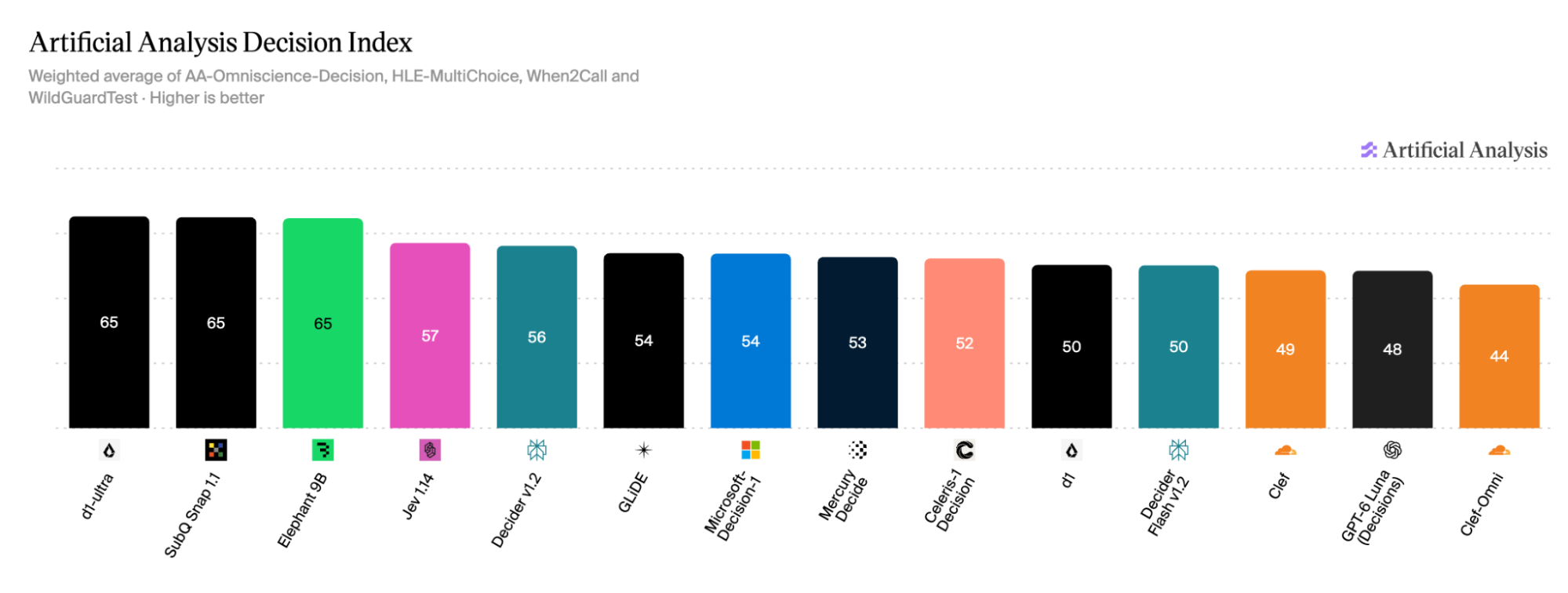
Source: Artificial Analysis Decision Index, an independent evaluation of decision models.
Dual Uncertainty Calibration
In many applications, a decision model's output is consumed programmatically, for example, as a routing threshold, a risk weight, or as a prior for downstream systems. Such applications require reliable uncertainty estimation, that is, interpretable and statistically reliable probability scores for a given decision.
Current decision models are trained with one-hot cross-entropy. Under this setting, the optimization signal is derived from realized outcomes rather than underlying probabilities. Although such an objective is statistically well-founded, models trained this way can become overconfident in practice. Moreover, established mitigation measures are based on multi-sample uncertainty estimation methods, such as semantic entropy, and thus introduce computational overhead that is incompatible with the single-pass inference requirements of a fast decision model. Nascent single-generation alternatives, such as verbalized confidence, avoid this overhead but can be unreliable without additional calibration.
In contrast, our approach to reasoning calibration is motivated by the established distinction between two sources of uncertainty: aleatoric uncertainty (inherent randomness in the outcome) and epistemic uncertainty (uncertainty arising from limitations in the model's knowledge). We treat these as distinct calibration targets, and develop complementary supervision strategies for each accordingly.
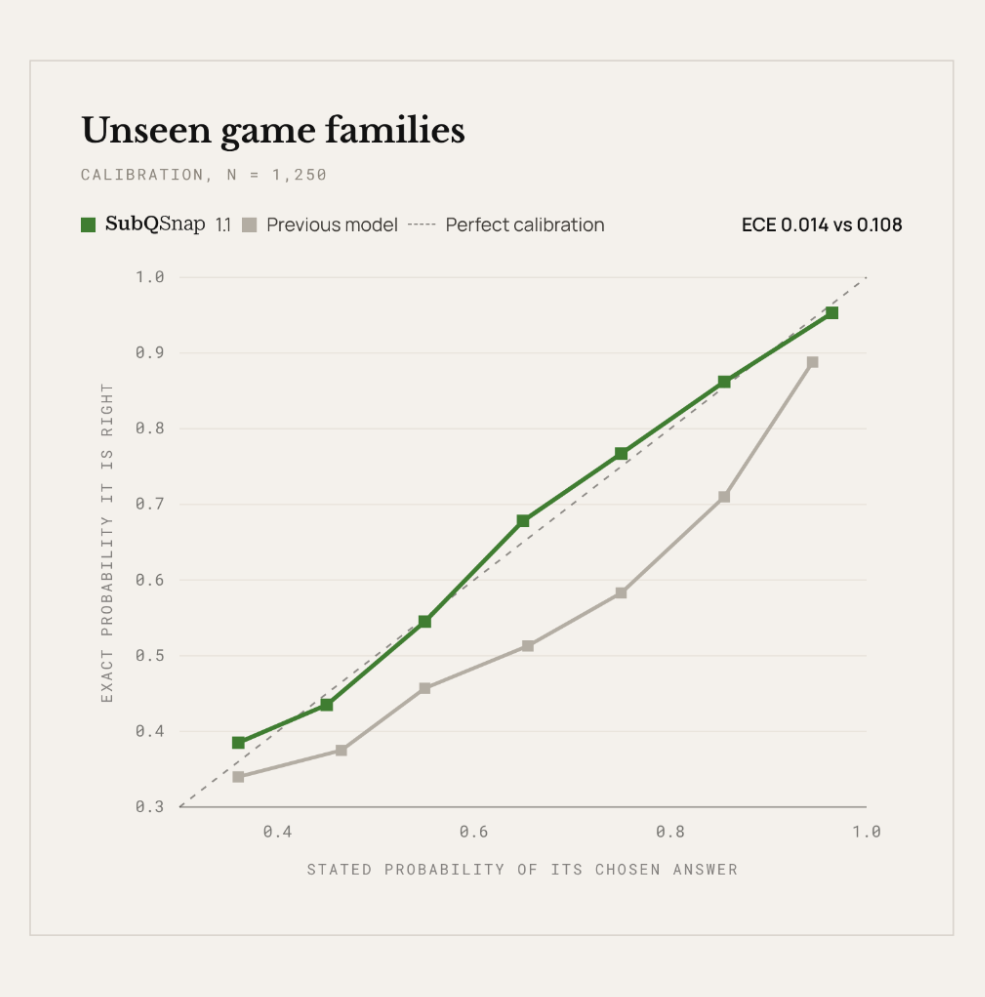
Figure 1. Calibration on unseen game families.
To calibrate aleatoric uncertainty, we train Snap v1.1 on synthetic, parameterized probability games (e.g., Markov chains) as such settings allow exact closed-form Bayesian posteriors. Thus, the supervision target can be derived from the full posterior distribution rather than an empirical sample from an underlying unknown distribution. We evaluate this post-training with a dataset consisting of held-out problem families not seen during training (e.g., system reliability, Poisson arrival processes) and we find strong generalization behavior: Expected Calibration Error (ECE) drops from 0.108 in Snap v1.0 to 0.014 in Snap v1.1, while agreement with Bayes-optimal decisions increased from 83% to 90% (Figure 1).
For epistemic uncertainty, where no analytical prior exists, we develop a supervision signal from an explicit abstention target ("I don't know") that is anchored to the model's empirical competence over a large sample size. For each training sample, we measure prediction variance across permuted answer orderings and then allocate the remaining probability mass to abstention. Interestingly, supervising abstention against continuous, calibrated probabilities significantly outperformed a hard binary signal ("was the top prediction correct?"), the latter of which caused abstention to degrade from 87% to 72% non-hallucination retention. On a custom unanswerable omniscience proxy, confident errors dropped by 81% (non-hallucination rate rose from 0.7% to 87.5%).
Action-Space Arbitration for Agentic Workflows
An increasingly important application of decision models is action-space arbitration in agentic workflows. Before executing a subroutine, an agent must determine, given its input context and available tools, whether to execute a call, request missing information, or decline an unexecutable request. While many function-calling datasets emphasize successful execution trajectories, real-world workflows require reliable discrimination between these three actions. Insufficient supervision for clarification and abstention can bias models toward premature execution, incentivizing them to fabricate missing arguments or hallucinate tool capabilities. Moreover, in conventional autoregressive LLMs, this choice is typically expressed through generated tokens rather than directly modeled as a distribution over operational actions. We instead frame arbitration as a single, non-autoregressive probability distribution over a discrete action space, in which execution, clarification, and decline compete directly.
Crucially, these action boundaries are relational: the distinction between clarification and decline depends on whether missing information can make execution feasible, while the distinction between clarification and execution depends on whether the available information is already sufficient. Optimizing this joint decision objective revealed two important failure modes during post-training that required explicit methodological tweaks:
- Positional artifacts. In initial training iterations, the decline action appeared at a fixed option index. Rather than learning the underlying execution preconditions, the model developed a spurious positional association ("option D means decline"). Randomizing candidate-action order throughout training mitigated this overfitting and subsequently improved decline accuracy from 80% to 95% versus the same dataset without such augmentation.
- Trilateral boundary trade-offs. Overweighting tool-execution examples substantially degraded clarification behavior, with correct "ask" decisions falling from 96% to 70%. Conversely, imposing a naive uniform three-way training mixture reduced execution precision substantially. Addressing these competing objectives required per-action regression gating to prevent improvements in one decision category from coming at the expense of another.
On the When2Call benchmark, Snap v1.1 improves from 75.2 to 96.2 (+21.0 paired gain), outperforming Jev 1.14 (82.6) while preserving function-calling execution fidelity (96.6 on BFCL). Rather than trading capabilities, all three decision boundaries improved simultaneously:
When2Call by action category
| Action category | Snap v1.1 | Jev 1.14 | Δ (v1.1 vs Jev 1.14) | Snap v1.0 |
|---|---|---|---|---|
| Correct declines (unexecutable/absent tools) | 98.3% | 67.6% | +30.7% | 49.1% |
| Clarification requests (missing parameters) | 96.5% | 98.0% | −1.5% | 94.0% |
| Correct tool calls (executable requests) | 93.8% | 87.8% | +6.0% | 89.2% |
We also noticed a significant jump in the Tools & Automation category of the HF Decision Index v0.2.1.
HF Decision Index 0.2.1: Tools & Automation
| Benchmark | Snap v1.1 | Jev 1.14 | Δ (v1.1 vs Jev 1.14) | Snap v1.0 |
|---|---|---|---|---|
| When2Call | 91.0 | 75.9 | +15.1 | 65.3 |
| Home appliance simulator | 87.5 | 48.9 | +38.6 | 79.5 |
| ToolRet | 63.2 | 59.6 | +3.6 | 63.3 |
| BFCL | 96.6 | 95.3 | +1.3 | 96.2 |
| API-Bank | 86.0 | 86.6 | −0.6 | 86.4 |
| Area score | 85.3 | 74.6 | +10.7 | 79.1 |
Chance-corrected scores (random guessing scores 0). When2Call here is the Decision Index's multiple-choice version, so it differs from the When2Call results above.
Single-Pass Reasoning via Distillation
Many of the recent capability gains on complex reasoning benchmarks in the LLM domain are reliant on test-time compute, for example, through the generation of chain-of-thought (CoT) traces on the order of thousands of autoregressive tokens. However, the value of a decision model lies in making highly accurate, structured decisions over a constrained answer space with minimal latency. Requiring lengthy reasoning traces at inference time would undermine this advantage, effectively turning the decision model into a smaller generative LLM. Instead, we investigate whether the conclusions of multi-step reasoning can be distilled into a single forward pass, improving decision quality without introducing additional inference-time costs.
To do so, we use diverse datasets across the sciences, medicine, and law and generate multiple independent reasoning rollouts per question on our internal teacher model. The resulting majority-vote distribution, blended with the ground-truth key, serves as a training target. We rejection sample questions where the teacher contradicts the ground truth label or where the model is already confident. This stage was executed prior to our self-knowledge calibration, ensuring subsequent abstention boundaries accounted for newly acquired reasoning behaviors.
Three empirical findings emerged as a result:
- Reasoning transfers while factual injection does not. In parallel ablations, fine-tuning directly on tens of thousands of similar questions produced zero gains on broader knowledge benchmarks and marginally degraded out-of-distribution accuracy. Conversely, distilling a few thousand multi-step reasoning problems improved on a variety of custom and standard knowledge-based benchmarks, all without inference-time scaling methods like CoT.
- Single-pass representation vs. autoregressive search. On held-out expert exam questions, Snap v1.1 achieved 90.0% accuracy in a single forward pass, outperforming its underlying base LLM performing explicit step-by-step chain-of-thought generation (87.0%). Post-training does not merely approximate generative reasoning, but may also induce a regularization effect in certain settings which improves performance.
- Compression fragility. These reasoning representations proved sensitive to standard post-training quantization: naive FP4 quantization caused performance on knowledge tasks to drop non-trivially. To mitigate this effect, we relied on a novel activation-aware calibration strategy.
During our evaluation, we find, somewhat expectedly, that such intervention improves inferential derivation but not raw factual recall. On forced-choice queries testing obscure factual retrieval without inferential structure, performance remained largely flat. Thus, this post-training approach seems to unlock comparatively more accurate reasoning pathways over existing representations, but expanding the underlying factual reservoir remains an open problem that we are continuing to study.
Evaluation and Empirical Results
Enterprise Workflows Across 16 Specialized Benchmarks
To measure real-world task performance beyond aggregate LLM benchmarks, we evaluated Snap v1.1 against Snap v1.0 and Jev 1.14 across 16 chance-corrected enterprise evaluations spanning security, document verification, legal review, and tool routing.
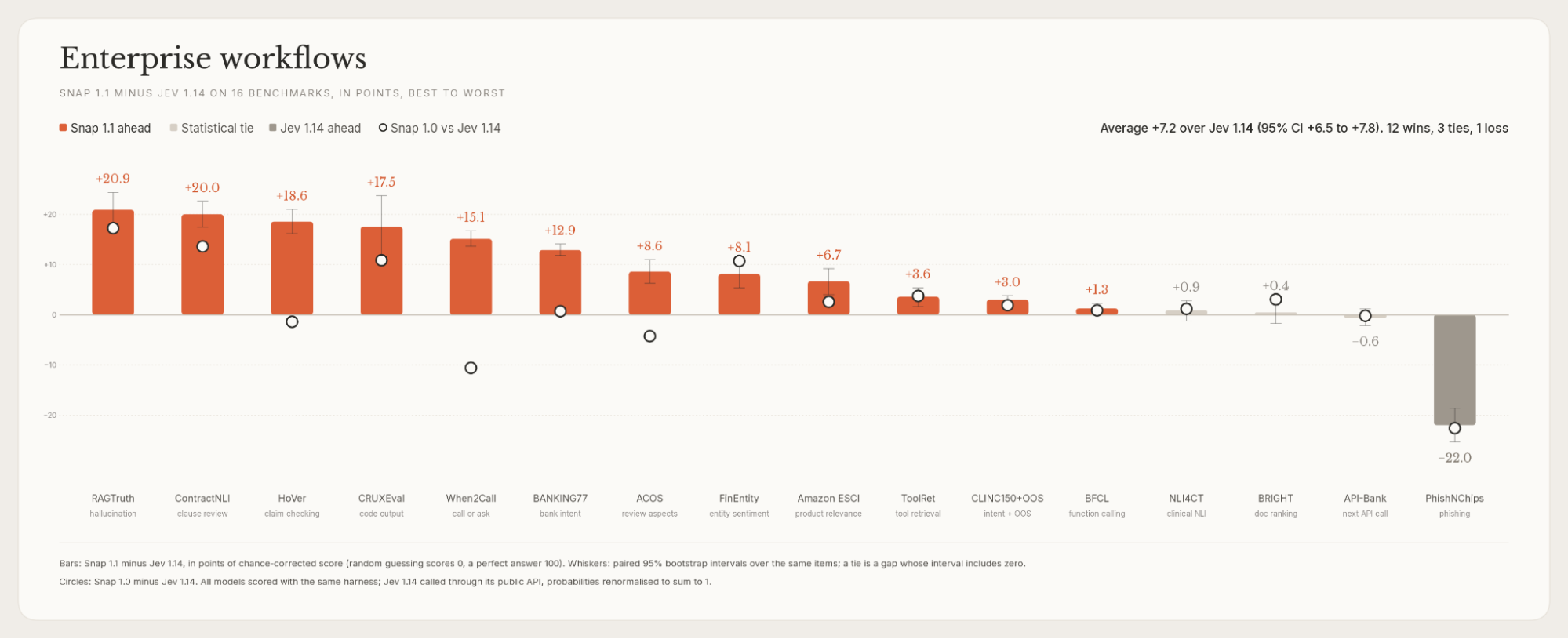
Across the suite, Snap v1.1 averages a +7.2 point advantage over Jev 1.14 (95% bootstrap CI [+6.5, +7.8]). Performance gains are concentrated in tasks demanding multi-document grounding and high-precision extraction:
- Verification and extraction. Substantial margins on RAGTruth (+20.9), ContractNLI (+20.0), HoVer (+18.6), and CRUXEval (+17.5).
- Statistical ties. Performance between Snap v1.1 and Jev 1.14 is indistinguishable on NLI4CT (+0.9), BRIGHT (+0.4), and API-Bank (−0.6), where confidence intervals span zero.
- Trade-offs and limitations. Jev 1.14 maintains a decisive lead on PhishNChips (−22.0). Follow-up analysis suggests this gap is driven primarily by classification thresholds rather than underlying discrimination ability. Snap 1.1 achieves comparable ROC-AUC to Jev 1.14 (0.91 vs. 0.92), but its default decision threshold produces suboptimal classifications on borderline cases. We are investigating improved threshold calibration to address this gap.
Performance in Agentic Workflows
Long-context capacity is useful only if an agent can reliably decide when to act over the retrieved artifact. Figure 3 illustrates our context envelope alongside a breakdown of action-space arbitration on the When2Call benchmark (3,423 evaluations).
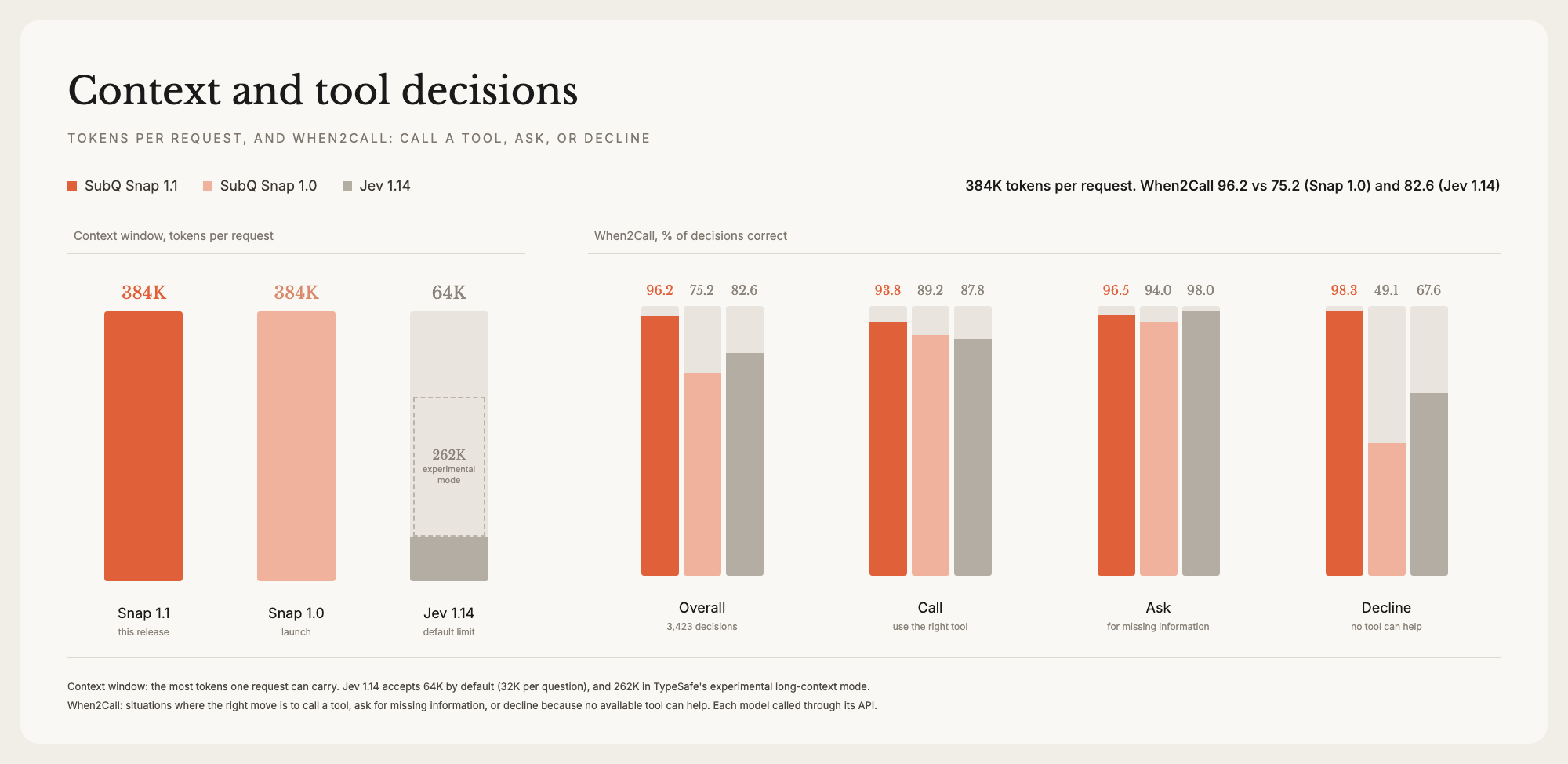
Figure 3. Context window and When2Call decisions.
Snap v1.1 supports native context of 384K tokens of interleaved text and images, compared to Jev 1.14's default 64K limit (262K in experimental mode).
On action arbitration, Snap v1.1 achieves 96.2% overall accuracy on When2Call. The primary driver is a resolved decline boundary: Snap v1.1 correctly refuses unexecutable tasks 98.3% of the time, compared to 49.1% for Snap v1.0 and 67.6% for Jev 1.14. On tool execution ("Call"), Snap v1.1 leads at 93.8% (vs. 89.2% for v1.0 and 87.8% for Jev). On clarification queries ("Ask"), Jev 1.14 retains a slight edge (98.0% vs. Snap v1.1's 96.5%), reflecting the conservative boundary trade-offs discussed in our methodology.
Macro Indices, Calibration, and Single-Pass Reasoning
Beyond enterprise classification and tool use, post-training targeted broad decision benchmarks, rigorous calibration, and single-pass inferential derivation.
| Evaluation dimension | Benchmark / metric | Snap v1.1 | Jev 1.14 | Δ (v1.1 vs Jev 1.14) | Snap v1.0 |
|---|---|---|---|---|---|
| Broad decision index | Artificial Analysis Decision Index (AADI) | 65 (tied #1, Artificial Analysis) | 57 | +8 | N/A |
| HF Decision Index 0.2.1 | 65.7 | 60.6 | +5.1 | 61.8 | |
| Knowledge & Reasoning | 50.9 | 55.1 | −4.2 | 48.5 | |
| Language Understanding | 71.6 | 63.3 | +8.3 | 69.7 | |
| Retrieval & Classification | 67.0 | 63.1 | +3.9 | 61.3 | |
| Tools & Automation | 85.3 | 74.6 | +10.7 | 79.1 | |
| Arts & Human Taste | 50.5 | 37.4 | +13.1 | 45.0 | |
| Tool execution | Berkeley Function-Calling Leaderboard (BFCL) | 96.6 | 95.3 | +1.3 | 96.2 |
| Single-pass reasoning | Humanity's Last Exam (HLE, accuracy) | 19.7 | 18.5 | +1.2 | 16.2 |
| Held-out expert exam suite (single pass) | 90.0% | — | — | 87.0%* | |
| Aleatoric calibration | Unseen probability games (ECE, lower is better) | 0.014 | — | — | 0.108 |
| Bayes-optimal decision agreement | 90.0% | — | — | 83.0% | |
| Epistemic calibration | Omniscience proxy non-hallucination | 87.5% | — | — | 0.7% |
| Confident errors on unanswerable queries (lower is better) | 57 / 600 | — | — | 294 / 600 |
*Represents our underlying base model running multi-step chain-of-thought autoregressive decoding. HF Decision Index rows are chance-corrected; the five indented rows are its subject areas. Δ compares Snap v1.1 with Jev 1.14; green marks a Snap lead.
These evaluations indicate that specialized decision models do not require autoregressive decoding to solve complex agent routing problems. By supervising on exact Bayesian posteriors, balancing action-space boundaries, and distilling multi-step reasoning traces into non-autoregressive representations, Snap v1.1 provides an auditable, sub-second decision layer across sequences up to 384K tokens.
Our ongoing work focuses on the remaining frontier: bridging the performance gap on direct factual recall tasks where inferential reasoning cannot substitute for stored parametric knowledge.
From Better Decisions to Better Agents
We believe decision models are only interesting insofar as they can take real work away from frontier LLMs. In a typical agentic workflow, LLMs spend a significant amount of time making relatively small, structured decisions: which files to examine, which tools to call, whether results satisfy requirements, or whether additional information is needed. These decisions don't necessarily require generating thousands of tokens, yet the information needed to make them correctly can be enormous. We believe a sufficiently capable decision model should take over much of this work, leaving frontier LLMs to focus on tasks that genuinely require open-ended generation and extended reasoning. This is why we're particularly excited about Snap 1.1's improvements in tool use, intent understanding, and document verification.
However, decision quality alone is not enough. If a decision model takes 30 seconds to determine which tool an agent should call, we've simply introduced another bottleneck. For decision models to become a fundamental part of agentic systems, they need to be fast, memory-efficient, and capable of reasoning over large amounts of context without sacrificing efficiency. This is where Subquadratic Sparse Attention changes how the computational cost of processing context scales, making it practical to reason over large amounts of information and make decisions quickly and efficiently. Snap 1.1 brings us closer to a future where decision models don't just assist frontier LLMs, but take meaningful work away from them.
Availability and Pricing
Starting today, developers can integrate SubQ Snap v1.1 via our API at $0.04 per 1M input tokens, featuring zero pricing overhead on output generation.
To explore technical documentation or start building, visit console.subq.ai.